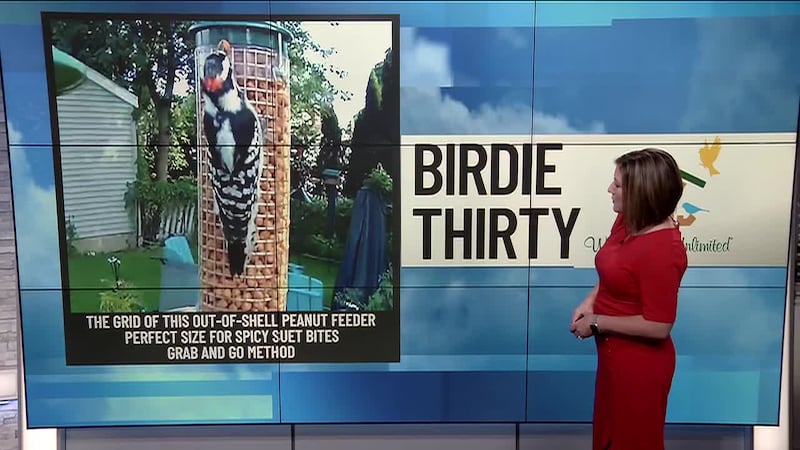
The grid of this out-of-shell peanut feeder conveniently features openings that are also the perfect size for these spicy suet nuggets! These bite-sized bits of suet, beloved by many birds, are currently being enjoyed by a White-breasted Nuthatch, and then a male Downy Woodpecker. You will often see these nuthatches demonstrating the “grab and go” method shown here. When foraging, they typically will grab a seed (or in this case suet nugget), and then fly it to a nearby tree where they will then wedge the seed into the bark, allowing the bark to hold it for them as they then peck the seed open and devour the morsel inside.
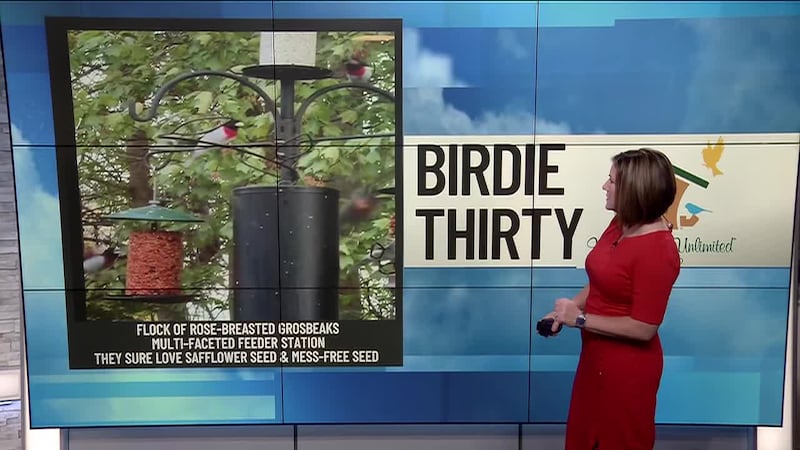
This incredible video captures a flock of Rose-breasted Grosbeaks at a multi-faceted feeder station. Though the males with their colorful red bibs are the star of the show here, a female Rose-breasted Grosbeak (with her own subtle beauty) can be briefly seen in the lower right-hand corner of the screen. Clearly delighted by the many and varied perching opportunities offered by the hardware utilized in this feeding station, the Grosbeaks have chosen not to share this three-feeder oasis with any other species. After encouraging the sweet robin to move along, the Grosbeaks continue with this smorgasbord of seed cylinder options! On the left is a mess-free out-of-shell spicy seed cylinder containing seeds, nuts and fruit, and up top is a naturally squirrel-deterring seed cylinder comprised strictly of safflower. While the squirrels prefer to leave the bitter safflower shells alone, just as they usually steer clear of hot pepper, the Grosbeaks are completely uninhibited, and in fact love crunching open the hard shells of safflower seeds with their thick, strong beaks! If you haven’t seen any Grosbeaks since May, you have another chance to see them now. They are migrating back south to their winter homes and might just stop by your yard along the way!
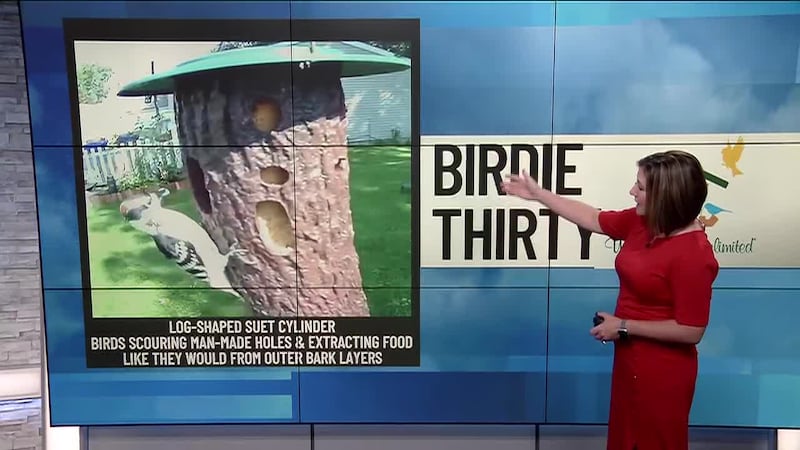
This convenient log-shaped suet cylinder feeder has attracted the attention of a White-breasted Nuthatch, and also a pair of male and female Downy Woodpeckers! Scouring the man-made holes in the “bark” of this feeder, both species are eagerly doing what they do best… extracting food from the protective outer bark layers of a tree (which in this case happens to be a bird feeder)! Though nuthatches and woodpeckers often seek food in similar places, nuthatches are not in the same family of birds as woodpeckers. There are many key differences, one of which can be glimpsed in the video shown here. Nuthatches use their strong feet/claws to securely scale trees in either direction, whereas woodpeckers, like this Downy pair, use their strong tail feathers to prop their bodies at the correct angle as they hop in the upward direction.
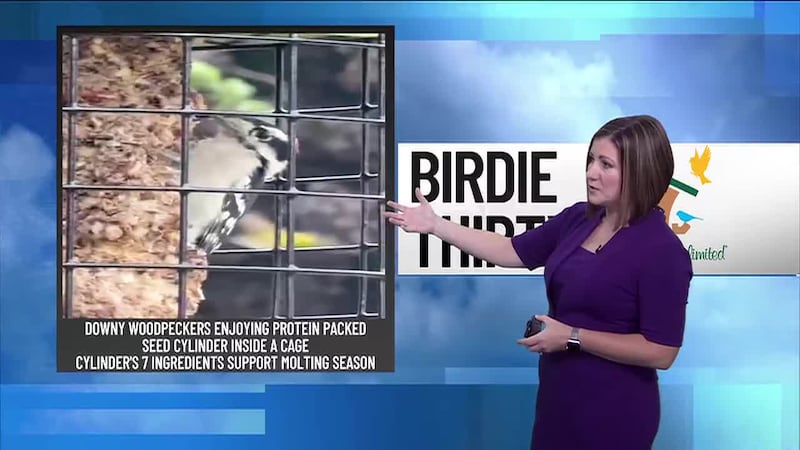
This pair of female and male Downy Woodpeckers is enjoying a fat- and protein-packed seed cylinder inside a cage designed to keep out black birds (such as Common Grackles), as well as European Starlings and even squirrels! This particular seed cylinder is perfect for molting season! The cylinder’s ingredients, selected specifically to support molting season, include sunflower chips, peanuts, suet nuggets, dried mealworms, tree nuts, NutraSaff™, and pecans! This fatty, protein-filled offering will fuel your backyard birds during this energy-intensive time of molting.
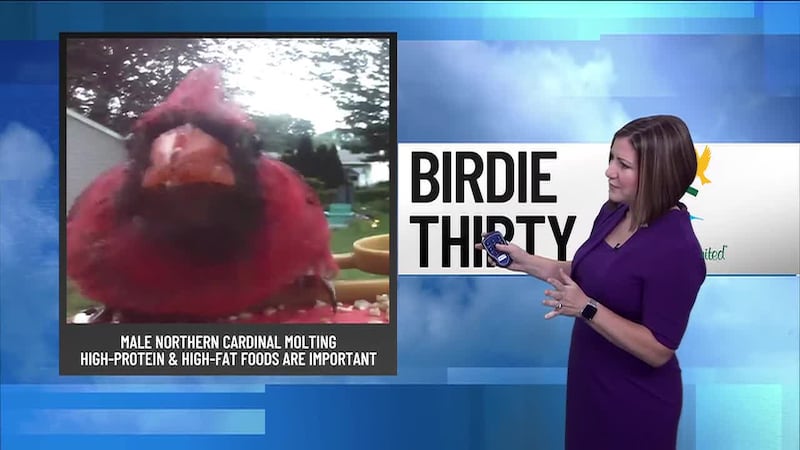
Here we see a male Northern Cardinal going through its molting process. This cardinal is enjoying some fine sunflower chips. While birds are molting, high-protein foods are imperative, as protein is required for feather replacement. High-fat foods are also important as fat is the primary source of energy used by birds to fuel them through the day. Sunflower chips are a great way for birds to get both the protein and fat required to get them through the molting season!
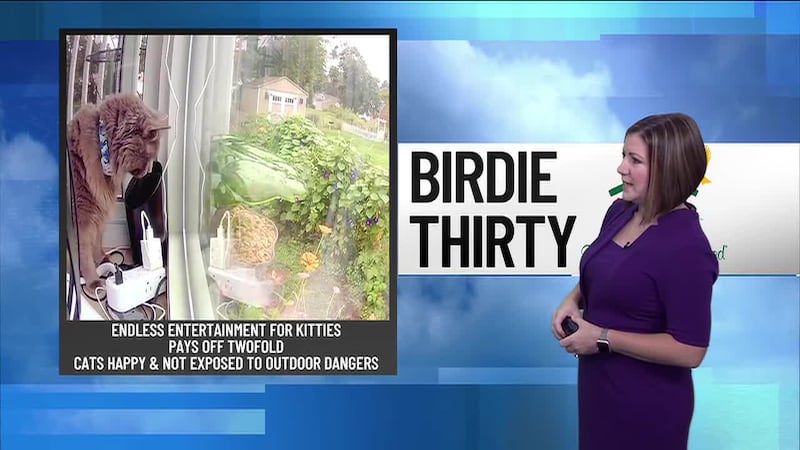
Window feeders provide endless entertainment for kitties, which pays off twofold: it keeps the cats happy and amused without exposing them to the outdoor dangers of predators and cars, and also lets them watch birds without killing them, thus helping out our feathered friends, too! Feral/outdoor domestic cats are one of the top three reasons for decline in bird populations (i.e bird death) in North America, so a window feeder (and indoor cats) are two big steps in the right direction! As seen here, this parade of curious kitties is enraptured by the idea that a bird might visit momentarily. Once a cat learns that a window feeder will attract these winged wonders, it will often stay pinned at the window for hours, eagerly awaiting the next bird. Sometimes watching the cats watch the birds can be even more entertaining than watching the birds themselves!